
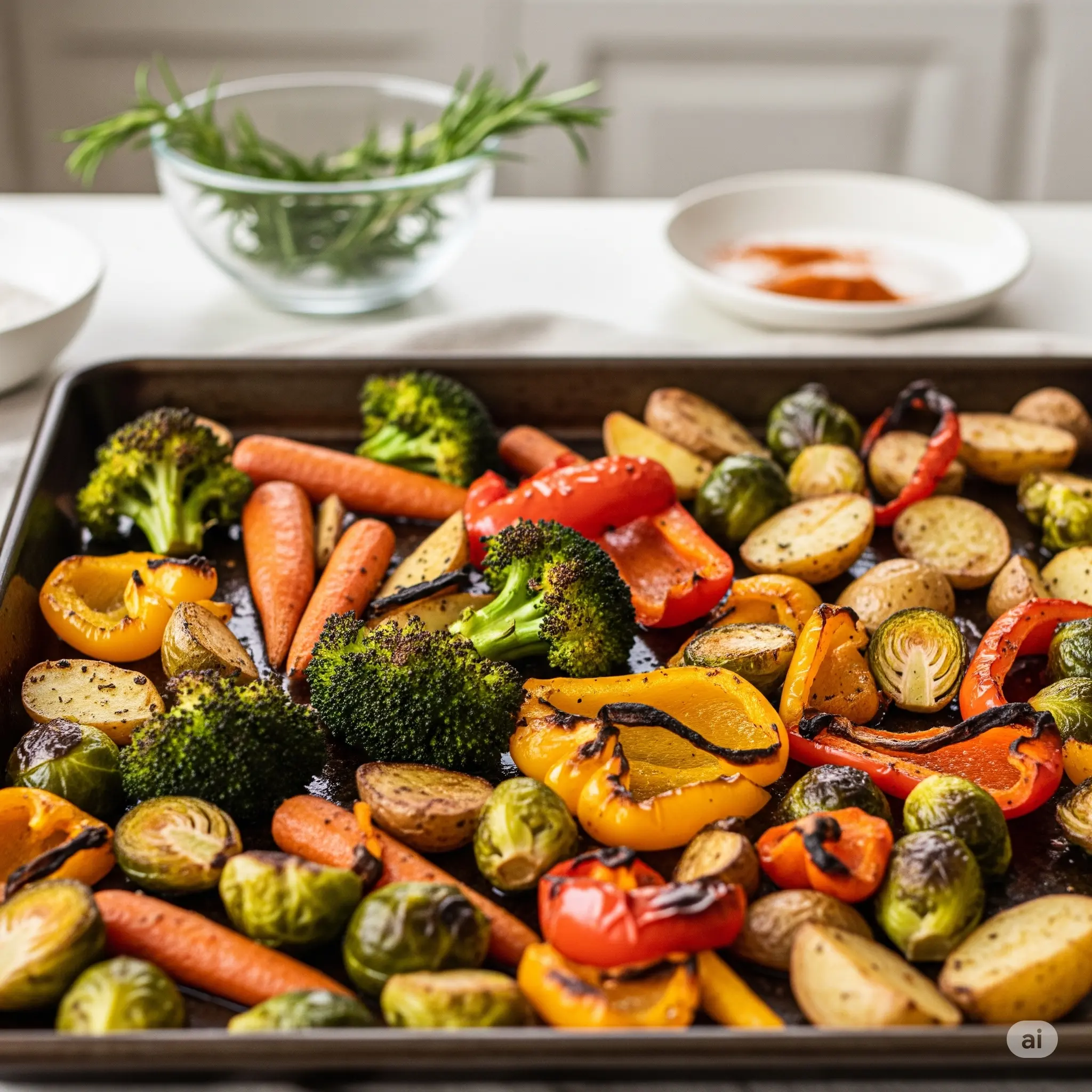
Do your vegetables often end up steamed, boiled, or simply overlooked on your plate? What if you could transform humble carrots, broccoli, or potatoes into intensely flavorful, caramelized delights that are easy to prepare and incredibly economical? Here at Infinitas Minds, I believe in smart kitchen solutions that make healthy eating accessible, delicious, and budget-friendly.
This comprehensive guide, brought to you by C. Holmes, is your definitive blueprint to mastering the art of roasting vegetables. Forget bland sides; we’re talking about unlocking incredible depth of flavor with minimal effort, reducing food waste, and making versatile dishes that can elevate any meal.
Get ready to discover the simple techniques that turn ordinary produce into culinary stars, saving you money and delighting your taste buds.
By the end of this guide, you won’t just know how to roast vegetables; you’ll understand the why behind the perfect roast, empowering you to create delicious, economical, and stress-free meals every time. Are you ready to elevate your vegetable game? Let’s get started!
Understanding the Magic of Roasting: Why Roasting Vegetables Unlocks Flavor and Economy
Why do roasted vegetables taste so much better than their steamed or boiled counterparts? The magic lies in the high, dry heat of the oven. This cooking method triggers what’s known as the Maillard reaction (the browning that creates rich, savory flavors) and caramelization (the sweetening of natural sugars).
These processes concentrate the vegetables’ natural flavors, creating a depth and complexity that other methods simply can’t achieve.
Beyond flavor, roasting vegetables is a powerhouse for home economy:
- Minimizes Waste: It’s an excellent way to use up vegetables that are slightly past their prime, preventing food waste.
- Budget-Friendly: You can transform inexpensive, everyday vegetables into gourmet-tasting sides or meal components.
- Versatility: Roasted vegetables are incredibly versatile – perfect as a side dish, added to salads, pasta, grain bowls, or even blended into soups.
- Hands-Off Cooking: Once in the oven, roasting requires minimal supervision, freeing you up for other tasks.
Understanding this transformative power is the first step to making roasting vegetables a staple in your smart kitchen.
The C. Holmes Blueprint for Perfect Roasting: Your Step-by-Step Guide
Ready to achieve perfectly caramelized, tender-crisp roasted vegetables every time? The C. Holmes Blueprint for roasting vegetables breaks down the process into simple, actionable steps. My approach emphasizes precision and mindful preparation to ensure maximum flavor and minimal fuss.
Here’s your step-by-step guide to mastering the roast:
- Choose and Prep Your Vegetables: Select the right veggies and prepare them uniformly.
- The Golden Ratio of Oil and Seasoning: Ensure proper coating for flavor and browning.
- Optimal Temperature and Pan Management: Create the ideal environment for a perfect roast.
- Know When They’re Done: Understand the signs of perfectly roasted vegetables.
This blueprint will empower you to create delicious, economical vegetable dishes with confidence.
Choosing Your Vegetables: Best Picks for Roasting & How to Prep Them
Not all vegetables roast equally, and proper preparation is crucial for success. Choosing the right vegetables and preparing them correctly are fundamental steps in your journey to master roasting vegetables.
Best Vegetables for Roasting (and why):
- Root Vegetables: Potatoes (sweet, Yukon Gold, red), carrots, parsnips, beets, turnips. These become wonderfully tender and sweet.
- Prep: Peel (optional), chop into roughly 1-inch pieces.
- Cruciferous Vegetables: Broccoli, cauliflower, Brussels sprouts. These get beautifully crispy edges and a nutty flavor.
- Prep: Chop into florets, halve Brussels sprouts.
- Hard Squashes: Butternut squash, acorn squash. Sweet and creamy when roasted.
- Prep: Peel, deseed, and chop into 1-inch cubes.
- Bell Peppers & Onions: Become sweet and tender.
- Prep: Slice into strips or wedges.
- Asparagus & Green Beans: Cook quickly and achieve a lovely tenderness with slight char.
- Prep: Trim ends.
Key Preparation Tip: Uniformity is Key! Whatever vegetable you choose, ensure all pieces are roughly the same size. This guarantees even cooking, preventing some pieces from burning while others remain undercooked. This simple step is vital for consistent results when roasting vegetables.
The Golden Ratio: Oil, Seasoning, and Temperature for Flavor Perfection
Once your vegetables are prepped, getting the seasoning and temperature right is where you unlock their full flavor potential. This “golden ratio” is crucial for achieving that irresistible caramelized exterior and tender interior when roasting vegetables.
- The Right Amount of Oil: Use just enough oil to lightly coat all the vegetable pieces, but not so much that they are swimming in it. Too little, and they’ll stick and dry out; too much, and they’ll steam rather than roast. Olive oil, avocado oil, or grapeseed oil are excellent choices.
- Tip: Drizzle oil, then toss with your hands to ensure every piece is coated.
- Season Generously: Salt and black pepper are non-negotiable. Beyond that, get creative!
- Herbs: Rosemary, thyme, oregano (fresh or dried).
- Spices: Garlic powder, onion powder, paprika, cumin, chili powder.
- Flavor Boosters: A squeeze of lemon juice after roasting, a drizzle of balsamic glaze, or a sprinkle of nutritional yeast for a cheesy flavor.
- High Heat is Your Friend (Temperature): For most vegetables, a high oven temperature (around 400°F / 200°C) is ideal. This high heat encourages rapid browning and caramelization. Ensure your oven is fully preheated before adding the vegetables.
The precise combination of oil, seasoning, and temperature ensures your roasting vegetables achieve peak flavor and texture.
Mastering the Roast: Techniques for Even Cooking and Crispy Edges
Achieving that perfect balance of tender inside and crispy, caramelized edges is the hallmark of expertly roasted vegetables. It’s less about a secret ingredient and more about simple techniques that optimize heat distribution.
- Don’t Overcrowd the Pan: This is one of the most common mistakes! If you pile too many vegetables onto a single baking sheet, they’ll steam each other instead of roasting. Give them space. Use two baking sheets if necessary, ensuring vegetables are in a single layer with a little room between them.
- Use the Right Pan: A sturdy, light-colored baking sheet (like aluminum) is best. Dark pans can absorb too much heat and cause burning. Avoid glass dishes, which tend to steam vegetables more.
- Flip/Toss Halfway: For even browning and cooking, give your vegetables a good stir or flip them over halfway through the cooking time.
- Check for Doneness: Vegetables are done when they are tender (easily pierced with a fork) and have developed nice golden-brown, caramelized spots. Don’t be afraid of a little char – that’s where the flavor lives!
- Cooking Times (General Guidelines at 400°F / 200°C):
- Hardy Root Vegetables (Potatoes, Carrots, Beets): 30-45 minutes
- Cruciferous Vegetables (Broccoli, Cauliflower, Brussels Sprouts): 20-30 minutes
- Softer Vegetables (Bell Peppers, Onions, Asparagus): 15-25 minutes
- Always test for doneness, as oven temperatures can vary.
By employing these techniques, you’ll consistently achieve restaurant-quality roasted vegetables right in your own kitchen.
Beyond the Pan: Creative Uses for Your Roasted Vegetables & Storage Tips
Once you’ve mastered roasting vegetables, the possibilities for delicious, economical meals are endless. Roasted vegetables are incredibly versatile, making them perfect for meal prep and reducing food waste.
- Versatile Uses:
- Side Dish: The simplest and most classic use.
- Salad Topper: Add cooled roasted vegetables to green salads for extra flavor and texture.
- Grain Bowls: Combine with your favorite grain (quinoa, rice), a protein, and a dressing for a hearty, healthy meal.
- Pasta Dishes: Toss with pasta, a light sauce, and some cheese for a quick vegetarian meal.
- Soups & Purees: Blend roasted vegetables (especially root vegetables like carrots, squash) into creamy, flavorful soups. (This is a fantastic way to transform leftovers, much like our [“Leftover Vegetable Soup”](https://www.google.com/search?q=link_to_your_leftover_soup_article_here) recipe!)
- Sandwiches/Wraps: Add a layer of roasted veggies for extra flavor and nutrition.
- Storage Tips:
- Cool Completely: Always let roasted vegetables cool completely before storing them.
- Airtight Containers: Store in airtight containers in the refrigerator for 3-5 days.
- Freezing: Most roasted vegetables freeze well for up to 3 months. Spread them in a single layer on a baking sheet to freeze, then transfer to a freezer-safe bag. This is ideal for bulk prepping and ensures zero waste.
By thinking “beyond the pan,” your perfectly roasted vegetables become a cornerstone of smart, economical cooking, providing delicious options for days.
FAQs: Your Roasting Vegetables Questions Answered by C. Holmes
Here are answers to common questions I receive about roasting vegetables:
- Do I need to peel all vegetables before roasting?
No, not necessarily! Many vegetables like carrots, potatoes (especially thin-skinned ones like red or Yukon Gold), and even beets can be roasted with their skins on after a good scrub. The skin adds flavor and nutrients.
- My roasted vegetables are soggy, not crispy. What went wrong?
This is usually due to overcrowding the pan, which causes the vegetables to steam instead of roast. Ensure a single layer with space between pieces. Too much oil can also be a culprit. Make sure your oven is fully preheated to a high temperature.
- Can I roast different vegetables together?
Yes, but try to group vegetables that have similar cooking times or cut the slower-cooking ones into smaller pieces. For example, potatoes and carrots can roast together. Broccoli and bell peppers also pair well. Avoid mixing very dense vegetables with very soft ones on the same pan.
- What’s the best way to reheat roasted vegetables?
For best results, reheat roasted vegetables in the oven or an air fryer at around 350°F (175°C) until warmed through and re-crisped. Microwaving can make them soggy.
- How can I make my roasted vegetables taste more exciting?
Experiment with different seasonings (smoked paprika, curry powder, chili flakes), fresh herbs (rosemary, thyme, parsley), and finishing touches like a squeeze of lemon juice, a drizzle of balsamic glaze, or a sprinkle of Parmesan cheese (if dairy is part of your diet). Don’t be afraid to mix and match!

C. Holmes is the keen analytical mind behind Infinitas Minds, a blog dedicated to revolutionizing the way we approach home economics. With a meticulous eye for detail and a passion for logical solutions, C. Holmes tackles everyday challenges to reveal hidden opportunities for efficiency and savings. His mission is to simplify life, spark innovation, and offer practical, insightful approaches for navigating our often-complex world with greater ease and financial clarity.
Driven by a belief that true mastery of home economics lies in understanding the ‘why’ and ‘how’ behind every decision, C. Holmes curates comprehensive guides, actionable experiments, and groundbreaking perspectives. Expect a blend of sharp analysis, creative problem-solving, and a touch of ingenuity in every piece, empowering readers to transform their homes into havens of efficiency and peace.