
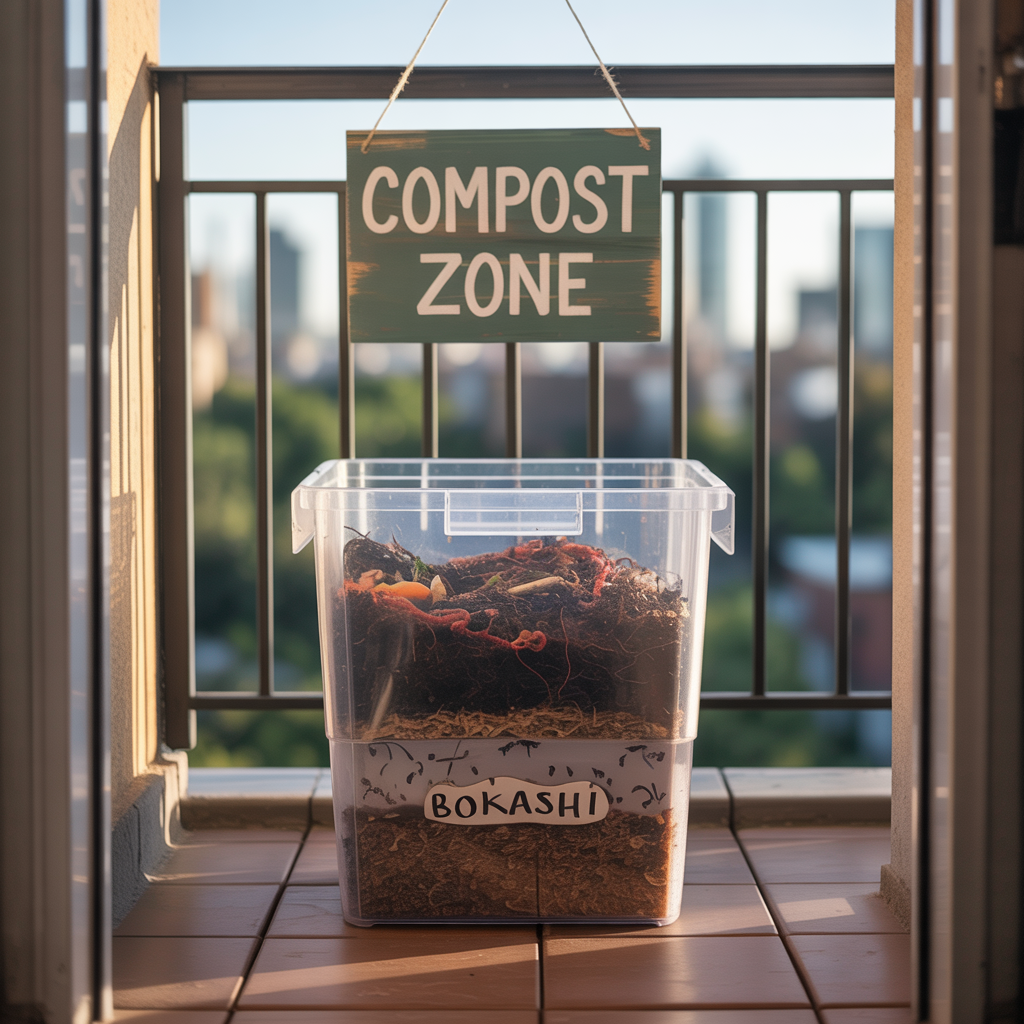
Every day, in kitchens across the bustling metropolis of São Paulo, a quiet tragedy unfolds. Coffee grounds, fruit peels, and vegetable scraps are scraped into the trash, destined for a landfill. We see this as “waste,” but in the grander scheme of nature, it is wasted potential.
These organic materials are packed with valuable nutrients, and the act of throwing them away breaks a fundamental natural cycle. For many urban dwellers, composting seems like a distant, pastoral dream—an activity reserved for those with sprawling backyards. The very idea conjures images of large, steaming piles, unwelcome odors, and pests.
I am here to tell you that this image is outdated. This guide is your definitive introduction to the world of small space composting. We will delve into the fascinating science of decomposition and provide detailed, step-by-step blueprints for two brilliant, apartment-friendly methods: vermicomposting (worm farming) and the Bokashi method. These are not just hobbies; they are powerful acts of Creative Urban Self-Sufficiency.
This is your opportunity to close the loop in your own home’s ecosystem, transforming your kitchen “waste” into “black gold”—a nutrient-rich soil amendment for your houseplants or balcony garden. Prepare to demystify the process and discover that you can create a thriving composting system right in your apartment, without the mess, smell, or fuss you imagined.
The Science of Decomposition: Turning Waste into a Resource
Before choosing a method, it’s crucial to understand the basic science of what you’re trying to achieve.
The Carbon-to-Nitrogen Ratio (C:N): The Golden Rule of Composting
This is the single most important concept in all of composting. For decomposition to occur efficiently and without odor, the microorganisms responsible need a balanced diet.
- “Greens” (Nitrogen-Rich): These are wet, fresh materials like fruit and vegetable scraps, coffee grounds, and fresh grass clippings. Nitrogen is essential for microbial growth and reproduction.
- “Browns” (Carbon-Rich): These are dry, woody materials like shredded newspaper, cardboard, dried leaves, and sawdust. Carbon provides the energy source for the microbes.
A healthy compost system needs a C:N ratio of roughly 25-30 parts carbon to 1 part nitrogen. An imbalance—too many “greens”—is the primary cause of smelly, slimy compost. The methods we’ll discuss have unique ways of managing this balance in a small space.
Aerobic vs. Anaerobic: A Tale of Two Processes
- Aerobic Decomposition: This is what happens in a traditional compost pile. Microbes that require oxygen break down organic matter. It produces heat and, when managed well, results in earthy-smelling humus. Vermicomposting is a form of aerobic decomposition.
- Anaerobic Decomposition: This process occurs in the absence of oxygen. It’s essentially a fermentation or pickling process. It doesn’t produce heat and can sometimes create stronger odors if not managed correctly. The Bokashi method is a controlled anaerobic process.
Method 1: Vermi composting (The Worm Farm Method)
This is a fantastic, highly efficient, and nearly odor-free composting method perfect for apartments. You are essentially creating a small ecosystem where worms do all the hard work for you.
Why Worms? Meet Nature’s Master Decomposers
It’s important to know we are not using common garden earthworms. The superstars of vermicomposting are specific species like Red Wigglers (Eisenia fetida). These are surface-dwelling worms that thrive in concentrated organic matter, unlike their soil-dwelling cousins. They are incredibly efficient, capable of processing their own body weight in food scraps every day.
Setting Up Your Apartment Worm Bin
You can buy pre-made, stacking worm bins online, but a DIY worm bin is easy and cheap to make.
- You’ll Need: Two opaque (non-transparent) plastic storage totes of the same size, and one lid. A drill.
- The Process:
- Take one tote (the “top bin”) and drill about 20-30 small holes in the bottom. This is for drainage.
- Drill a few air holes along the upper sides of this same top bin for ventilation.
- Nest the top bin inside the second tote (the “bottom bin”). The bottom bin will catch any liquid runoff (called “leachate” or “worm tea”).
- The lid will go on the top bin.
A Step-by-Step Guide to Starting Your Worm Farm for Composting
- Prepare the Bedding: Worms need a moist, carbon-rich bedding to live in. Tear up newspaper, cardboard, and paper egg cartons into small strips. Moisten it with a spray bottle until it feels like a damp sponge—not sopping wet. Fill your top bin about three-quarters full with this fluffy, damp bedding.
- Introduce the Worms: Gently place your Red Wiggler worms on top of the bedding. They will naturally burrow down to escape the light.
- Feeding Your Worms: For the first week, let the worms acclimate. After that, start feeding them by burying small amounts of kitchen scraps in different corners of the bin.
- What to Feed: Most fruit and vegetable scraps (apple cores, banana peels, carrot tops), coffee grounds and filters, crushed eggshells (adds grit and calcium), teabags (staples removed).
- What to AVOID: Meat, fish, dairy products, oily or greasy foods, and large amounts of citrus or onions (can make the bin too acidic).
- Harvesting the “Black Gold”: In 3-6 months, your bin will be full of dark, rich vermicompost. To harvest it, move all the finished compost to one side of the bin and add fresh bedding and food to the other side. The worms will migrate to the 1 new food over a couple of weeks, allowing you to scoop out the finished, mostly worm-free compost.
Troubleshooting Your Worm Bin
- Problem: Bad Smells. This is almost always caused by overfeeding or too many “greens” (a C:N imbalance). Solution: Stop feeding for a week or two and mix in more shredded newspaper or cardboard (“browns”) to absorb excess moisture and restore the balance.
- Problem: Fruit Flies. Solution: Always bury your food scraps completely under the bedding. This prevents flies from laying their eggs on the food surface.
- Problem: Worms Trying to Escape. This usually means the conditions inside are not right—too wet, too dry, or too acidic. Solution: Check the moisture level and adjust with more dry bedding or a light spray of water. Adding crushed eggshells can help lower acidity.
Method 2: The Bokashi Method (The Fermentation Method)
Bokashi is a brilliant Japanese method that is perfect for those who want to compost all food scraps (including meat and dairy) and who have very limited space.
The Science of Bokashi: Pickling Your Kitchen Waste
Bokashi is not technically composting; it is an anaerobic fermentation process. You add a special “Bokashi bran”—a carrier like sawdust or wheat bran that has been inoculated with a specific blend of effective microorganisms (EM-1). These microbes ferment the food waste in an airtight environment, essentially pickling it. This process neutralizes odors and prevents the waste from rotting.
Setting Up Your Bokashi Bin
A Bokashi bin is an airtight bucket, usually with a spigot at the bottom. The spigot is crucial for draining off the liquid (“Bokashi tea”) that is produced during fermentation, as too much liquid can ruin the process. Kits are available online in Brazil.
The Step-by-Step Guide to the Bokashi Process
- Layer Scraps & Bran: Add a layer of your kitchen scraps to the bucket. Unlike vermicomposting, you can add meat, dairy, bones, and oily foods. Chop larger items into smaller pieces.
- Sprinkle and Press: For every inch of food scraps, add a tablespoon or two of Bokashi bran. Use a potato masher or a flat plate to press down firmly on the layer. This is critical for removing air pockets.
- Seal the Bucket: Close the lid tightly. The system must remain anaerobic. Continue this layering process until the bucket is full.
- Drain the Tea: Every 2-3 days, open the spigot and drain the Bokashi tea. This liquid is a potent, microbe-rich fertilizer. Dilute it at a 1:100 ratio with water before feeding your plants.
- The Fermentation & Finishing Step: Once the bucket is full, seal it and let it sit undisturbed for two weeks. After two weeks, the contents will be pickled and have a sweet, vinegary smell. Crucially, it will not look like soil. It now needs to be buried in the ground to complete its decomposition. You can bury it in a large planter on your balcony, take it to a community garden, or give it to a friend with a yard.
Pros & Cons: Bokashi vs. Vermicomposting
| Feature | Vermicomposting (Worms) | Bokashi (Fermentation) |
| Space | Small footprint (one bin) | Small footprint (one bucket) |
| Smell | Low; earthy smell | Low; sweet/pickled smell |
| Speed | Slow (3-6 months for compost) | Fast (2 weeks to ferment) + burial time |
| Waste Accepted | No meat, dairy, oil, citrus | Accepts ALL food waste |
| Final Product | Finished, ready-to-use compost | Pre-compost (needs burial) + liquid fertilizer |
| Effort | Low daily effort | Daily layering/pressing when filling |
Frequently Asked Questions (FAQ)
- I live in a tiny “kitnet” in São Paulo. Will my apartment smell if I do this?
- When managed correctly, neither method should produce foul odors. A healthy worm bin smells earthy, like a forest floor. A healthy Bokashi bin smells tangy and pickled. Bad smells are a sign that something is wrong (usually too much food in the worm bin, or the Bokashi bin isn’t airtight), which is a fixable problem.
- I don’t have a balcony garden. What can I do with the finished compost?
- You can use it to revitalize your indoor houseplants. You can offer it to friends or neighbors who do have gardens. In São Paulo, you can also connect with local urban gardening groups or community gardens who are often thrilled to receive high-quality, homemade compost.
- Can I compost used coffee ground?
- Yes, absolutely! They are considered “greens” (nitrogen-rich) in the C:N ratio. Worms particularly love coffee grounds.
- I travel frequently for work. Will my worm farm die while I’m away?
- Worms are surprisingly resilient. A healthy, established worm bin can be left unattended for 2-4 weeks. Simply add a good amount of food scraps and fresh, moist bedding before you leave, and they will be fine. The Bokashi system, once sealed and fermenting, requires no attention at all.
Closing the Loop in Your Urban Ecosystem
You have just explored two powerful, ancient techniques masterfully adapted for modern urban life. Choosing to compost in your apartment is a profound statement. It is a refusal to participate in the linear economy of “take, make, dispose.” Instead, you are creating a circular system within your own home—a closed loop where the “waste” from your meals becomes the life-giving force for new growth. This is the very essence of Creative Urban Self-Sufficiency. You are not just reducing your trash; you are actively creating a valuable resource, fostering a tiny ecosystem, and building a more sustainable and connected life, right in the heart of the city.

C. Holmes is the keen analytical mind behind Infinitas Minds, a blog dedicated to revolutionizing the way we approach home economics. With a meticulous eye for detail and a passion for logical solutions, C. Holmes tackles everyday challenges to reveal hidden opportunities for efficiency and savings. His mission is to simplify life, spark innovation, and offer practical, insightful approaches for navigating our often-complex world with greater ease and financial clarity.
Driven by a belief that true mastery of home economics lies in understanding the ‘why’ and ‘how’ behind every decision, C. Holmes curates comprehensive guides, actionable experiments, and groundbreaking perspectives. Expect a blend of sharp analysis, creative problem-solving, and a touch of ingenuity in every piece, empowering readers to transform their homes into havens of efficiency and peace.