
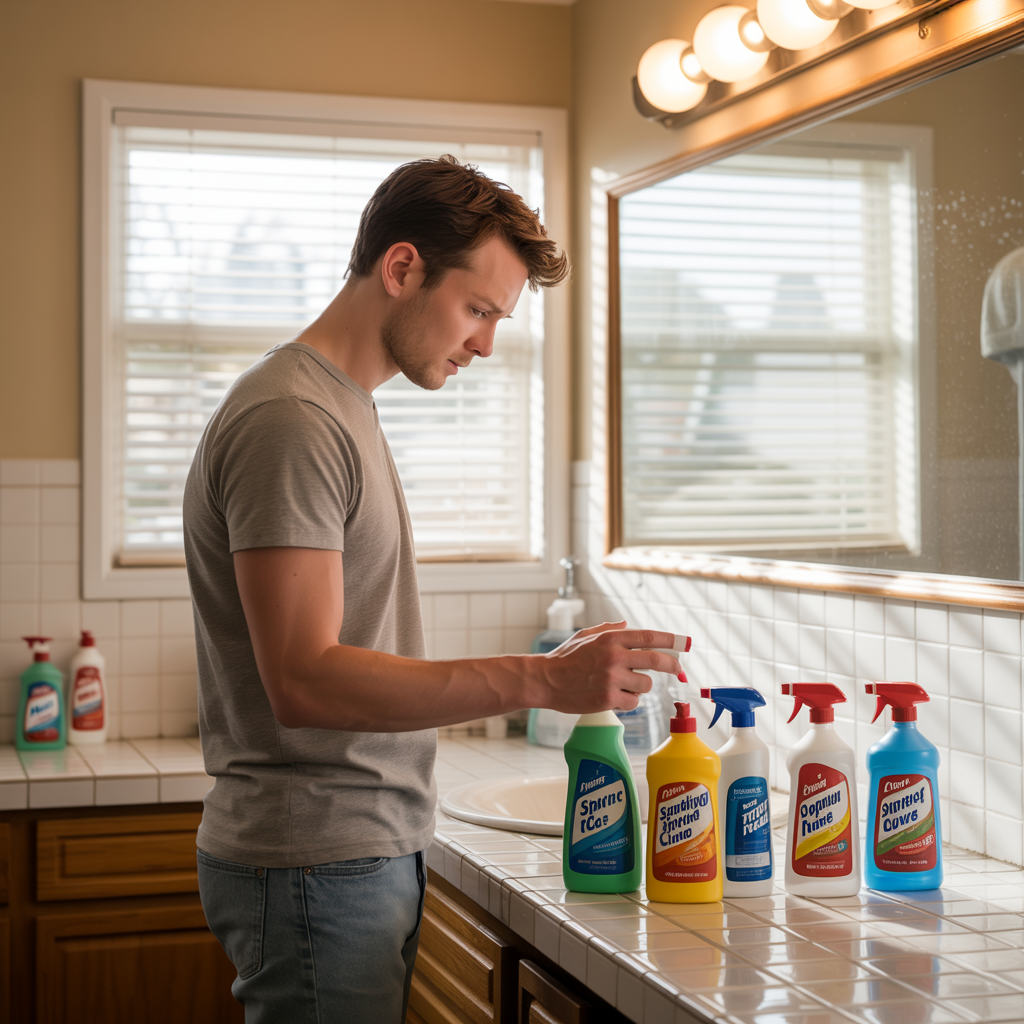
Tired of cleaning hacks that don’t deliver, and wondering if some common cleaning myths debunked by science could save you effort and expense? If you’re like me, you want a clean home without wasting precious time or hard-earned money on outdated advice or ineffective “miracle” solutions.
That’s exactly why I’m launching my “Home Science Debunked” series, and we’re kicking it off by tackling some of the most persistent cleaning myths. I’ll be your objective fact-checker, using simple science to reveal the truth behind these popular beliefs, so you can clean smarter, not harder (or pricier!).
Get ready for some “aha!” moments as we investigate the science (or lack thereof!) behind a few well-known cleaning “rules.” For instance, is that fizzy reaction when you mix vinegar and baking soda really creating a super cleaner, or is there more to the story? Do you actually need a mountain of suds to get things properly clean, or could using less soap be more effective? And what about hot water – is it always the champion of clean, or are there times when cooler water (and lower energy bills!) will do the job just as well?
Join me as I put these common cleaning myths under the microscope of simple, everyday science. By understanding the “why” behind what truly works – and what doesn’t – you’ll be empowered to make more efficient, economical, and effective choices in your cleaning routine. Let’s bust some myths and discover the scientific secrets to a truly smarter clean!
2. Myth #1: “Mixing Vinegar and Baking Soda Creates a Super Cleaner!” – The Fizzy Truth
Ah, the classic volcanic eruption in your sink! The popular claim is that mixing vinegar and baking soda creates a powerful, all-purpose “super cleaner,” largely because that impressive, fizzy reaction looks like some serious cleaning action is happening. We’ve all seen the advice: pour baking soda down a drain, follow with vinegar, and watch the satisfying foam. It feels like it must be doing something amazing, right? Well, as your objective fact-checker, let’s dive into the simple science and uncover the fizzy truth behind one of the most enduring common cleaning myths debunked today.
The Simple Science Explained:
What you’re witnessing is a classic acid-base reaction.
- Vinegar is a dilute solution of acetic acid (CH₃COOH).
- Baking soda is sodium bicarbonate (NaHCO₃), which is a base (or alkali).
When you combine an acid and a base, they react to neutralize each other. In this specific case, the reaction produces:
- Carbon Dioxide Gas (CO₂): This is what creates all those exciting bubbles and fizz!
- Water (H₂O).
- Sodium Acetate (CH₃COONa): This is a type of salt.
The Reality Check (Debunked!):
Here’s the kicker: once that vigorous fizzing subsides, the primary substance left behind is sodium acetate dissolved in water. While sodium acetate does have some very mild cleaning properties (it’s sometimes used as a food preservative or a de-icing agent), it is a far less effective cleaner than either vinegar or baking soda used on their own for their specific strengths.
- Vinegar’s Power: Its acidity is great for dissolving mineral deposits (like hard water stains or soap scum) and cutting through some types of grease.
- Baking Soda’s Power: Its mild alkalinity and gentle abrasive texture are excellent for scrubbing, deodorizing, and tackling some greasy messes.
When you mix them, you essentially neutralize both their individual cleaning superpowers, ending up with something much weaker.
So, is the Fizz Ever Useful?
Yes, the physical action of the fizzing itself can be beneficial in certain situations.
- Loosening Gunk: For a clogged or slow drain, pouring baking soda followed by vinegar can create that bubbling action within the pipe, which can help physically dislodge or loosen some minor blockages or built-up grime.
- Lifting Baked-on Food: Similarly, making a paste of baking soda on a dirty pan and then spraying it with vinegar can create a fizz that helps lift stubborn food particles while the reaction is happening.
Smarter, Cheaper Approach:
For most cleaning tasks, you’ll get far more bang for your buck (and better results!) by using these two household champions separately, leveraging their distinct chemical properties.
- Use vinegar solutions for descaling, cutting grease on stovetops, or cleaning glass.
- Use baking soda pastes for scrubbing sinks, ovens, or as a gentle abrasive.
If you do want that fizzing action for a drain, remember it’s the reaction itself doing the mechanical work, not the resulting liquid.
The Enthusiastic Takeaway:
Isn’t that fascinating? While the volcano effect is fun, now you know the science! You’re no longer just mixing and hoping; you understand that to truly harness the power of vinegar and baking soda, it’s often best to let them shine individually. This knowledge alone will make your cleaning more effective and prevent you from unintentionally weakening your natural cleaning arsenal – a true win for any budget-conscious homemaker looking to clean smarter!
3. Myth #2: “More Soap or Detergent Always Means a Better Clean!” – The Suds Fallacy
Here’s another incredibly pervasive belief that often leads to wasted product and money, making it a prime candidate for our common cleaning myths debunked list: the popular claim that more soap or detergent – and therefore more suds – always means a better, deeper clean. We’ve been conditioned by commercials showing mountains of luxurious lather to equate suds with cleaning power. But as your objective fact-checker ready to reveal some simple science, I’m here to tell you that this is largely “the suds fallacy,” and often, less is actually more!
The Simple Science Explained:
Soaps and detergents contain special molecules called surfactants. Think of these molecules as tiny cleaning agents with two distinct ends:
- One end is hydrophilic (water-loving).
- The other end is hydrophobic (water-fearing, but oil-and-grease-loving).
When you use soap or detergent in water, these surfactant molecules get to work. The oil-loving ends attach themselves to dirt and grease particles. Then, as you agitate (scrub, swish, or tumble in a machine), these surfactants surround the dirt/grease, forming tiny spheres called micelles, with the dirt trapped inside and the water-loving ends facing outwards. This allows the dirt and grease to be lifted from the surface and rinsed away with the water.
Crucially, surfactants need to be at the right concentration to form these micelles effectively.
The Reality Check (Debunked!):
While a certain amount of suds can indicate that your cleaner is present and working, an excessive amount doesn’t mean better cleaning. In fact, using too much soap or detergent can be counterproductive and costly:
- Sticky Residue: Excess soap or detergent that isn’t thoroughly rinsed away can leave behind a sticky, dulling residue on surfaces (dishes, clothes, floors, countertops). Ironically, this residue can actually attract more dirt and dust, making things get dirty again faster!
- Rinsing Nightmares: The more product you use, the more water and effort it takes to rinse it away completely. This wastes your time, water (and money on your water bill!), and can be especially problematic for laundry, where detergent residue can irritate skin or make fabrics feel stiff.
- Appliance Issues: Using too much detergent in appliances like dishwashers or washing machines can lead to over-sudsing, which can interfere with their proper functioning, reduce cleaning efficiency, and even cause overflows or damage to the machine over time.
- Wasted Product, Wasted Money: This one is obvious for us budget-conscious folks. If you’re consistently using more product than you need, you’re literally pouring money down the drain.
Smarter, Cheaper Approach:
- Read the Label: Always start by reading the instructions on your soap or detergent. Manufacturers provide recommended amounts based on their product’s concentration and the intended use.
- Less is Often More: Especially with modern concentrated detergents, you often need much less than you think. Try starting with half the recommended amount and see if you get good results. You can always add a tiny bit more if needed, but you can’t take it away once it’s in there.
- Focus on Agitation and Rinse: Good old-fashioned scrubbing or the mechanical action of your washing machine/dishwasher, combined with a thorough rinse, is often more important than a mountain of suds.
The Enthusiastic Takeaway:
Isn’t it liberating to know you don’t need a bubble bath in your sink to get things truly clean? By understanding the science of surfactants and ditching the “more suds” myth, you’ll achieve a better, residue-free clean, make your cleaning products last much longer, and save a nice chunk of change. That’s cleaning smarter, backed by science!
4. Myth #3: “Hot Water is Always Superior for Cleaning!” – When Temperature Really Matters (and When It Doesn’t)
This is a big one, deeply ingrained in many of our cleaning habits, and another prime candidate for our common cleaning myths debunked investigation: the widespread belief that hot water is always superior for every cleaning task. We often instinctively reach for the hot tap, assuming it will cut through grime more effectively or kill more germs.
While hot water certainly has its place, as your objective fact-checker exploring the simple science, I’m excited to reveal that it’s not always necessary, and sometimes, relying on it can be a waste of energy and money. Understanding when temperature really matters is key to efficient and economical cleaning.
The Simple Science Explained:
Temperature does play a role in cleaning, primarily in a few ways:
- Molecular Motion & Solubility: Hot water molecules move faster than cold water molecules. This increased energy can help to:
- Dissolve some substances faster: Think of how sugar dissolves more quickly in hot tea than in iced tea. Hot water can help break down and loosen certain types of dirt, especially greasy or oily residues, by making them less viscous (more fluid).
- Speed up chemical reactions: Some cleaning agents, particularly certain types of disinfectants or enzymatic detergents, may work more effectively or faster at higher temperatures as specified by the manufacturer.
- Killing Germs (But Not Always How You Think):
- Very hot water (like boiling water or the sanitize cycle on a dishwasher, typically 140°F/60°C or higher) can kill many common bacteria and viruses through heat alone.
- However, the “hot” water from your tap (usually around 120°F/49°C) is often not hot enough on its own to reliably sanitize surfaces without the aid of a proper disinfectant. Its main benefit here is often in conjunction with soap to help lift grime.
The Reality Check (Debunked! – The “Always Superior” Part):
The idea that hot water is always better is where the myth lies. Here’s why:
- Modern Detergents are Effective in Cold/Cool Water: Many laundry detergents and even some dish soaps are now formulated with enzymes and surfactants that work very effectively in cold or cool water. Using hot water with these can be unnecessary and may even damage the enzymes, reducing their effectiveness.
- Setting Certain Stains: For some types of stains, particularly protein-based ones like blood, egg, or dairy, hot water can actually “cook” the stain onto the fabric, making it much harder to remove. Cold water is usually recommended for these.
- Energy Consumption & Cost: Heating water is a significant energy user in most households. Consistently defaulting to hot water when it’s not needed means higher utility bills. This is a big one for us budget-conscious individuals!
- Fabric Care: Hot water can be harsh on delicate fabrics, causing shrinkage, fading, or damage to fibers over time.
Smarter, Cheaper Approach (Be a Temperature Detective!):
- When Hot Water Is Your Friend:
- Greasy Dishes & Pans: Hot water definitely helps cut through and dissolve grease more effectively, especially when combined with a good dish soap.
- Specific Sanitization Needs: If you need to sanitize (e.g., cutting boards after handling raw meat, or during a household illness), using hot water in conjunction with a disinfectant (or a dishwasher’s sanitize cycle) is effective.
- When Product Instructions Specify Hot Water: Some specialized cleaners or detergents are designed to work best with hot water.
- When Cold/Cool Water Shines (and Saves You Money & Energy!):
- Most Laundry Loads: With modern cold-water detergents, you can get excellent cleaning results while saving significant energy. Always check garment care labels.
- Rinsing Most Dishes: After washing with soap and warm/hot water, rinsing in cool water is usually fine.
- General Surface Wiping: For many everyday spills or light cleaning on countertops or floors, cool or lukewarm water with an appropriate cleaner is perfectly adequate.
- Treating Protein-Based Stains.
The Enthusiastic Takeaway:
It’s not about banishing hot water entirely, but about using it strategically! By understanding when temperature truly makes a difference, you can debunk the “hot water is always best” myth, achieve fantastic cleaning results, protect your clothes, save energy, and reduce your utility bills. Now that’s what I call a scientifically smart (and thrifty!) approach to cleaning!
5. Clean Smart, Not Hard: Embracing Science for an Efficient and Economical Home!
And there you have it – three of the most common cleaning myths debunked with a healthy dose of simple science! From understanding the truth behind that fizzy vinegar and baking soda reaction to realizing that more suds don’t equal more power, and that hot water isn’t always the hero it’s made out to be, I hope you’re feeling enlightened and, more importantly, empowered.
As your enthusiastic cleaning myths-buster and objective fact-checker, my goal was to show you that cleaning smart, not just hard, by embracing a little bit of science can lead to a truly more efficient, effective, and wonderfully economical home.
By questioning “traditional wisdom” or those cleaning “hacks” that sound too good to be true (or just don’t seem to deliver the promised results), you’re taking the first step towards a more intelligent approach to your household chores. You no longer have to waste your precious time, energy, or money on methods that are ineffective or even counterproductive. Instead, you can now make informed choices based on a basic understanding of how and why certain cleaning principles work.
This is just the beginning of our “Home Science Debunked” series! I encourage you to carry this spirit of curious investigation into all aspects of your home care. Before you try a new cleaning tip you see online, ask yourself: Does this make scientific sense? Often, a little bit of critical thinking (and perhaps a quick search for a reliable explanation) can save you a lot of trouble. Stay tuned for future installments where we’ll tackle more household cleaning myths. For now, go forth and clean with the confidence of a savvy home scientist!
6. FAQ: Your Cleaning Myths Questions Answered
Here are some common questions that arise once you start questioning those old cleaning tales:
1. So, is there any benefit to the fizz when I mix vinegar and baking soda for cleaning?
Yes, there can be a mechanical benefit! That exciting fizz is carbon dioxide gas being released. While the reaction is actively happening, this bubbling action can help physically loosen light gunk in drains or stuck-on food. However, the liquid solution left after the fizzing stops (mostly water and sodium acetate) is a much weaker cleaner than vinegar or baking soda used on their own for their specific acidic or abrasive/alkaline properties. So, for most surface cleaning, use them separately for best results!
2. If I use less detergent as suggested, how do I know my clothes/dishes are actually getting clean?
Great question! Look for the actual results, not just the amount of suds. Clean clothes should look bright, feel soft (not stiff or sticky), and smell fresh (or neutral, not heavily perfumed, which can indicate residue). Clean dishes will be free of food particles, grease, and won’t have a soapy film. Modern detergents are highly concentrated; often, the recommended amount (or even slightly less) combined with your machine’s agitation and proper rinsing is more than enough for a thorough clean.
3. Are there any times when using only hot water (without any cleaner) is effective for cleaning?
Hot water alone can be effective for rinsing away very loose, fresh debris or for a quick warming effect on some surfaces. However, for most actual cleaning (removing oils, stuck-on dirt, or disinfecting), hot water from your tap (usually around 120°F/49°C) isn’t typically hot enough or powerful enough on its own. It usually needs the help of a cleaning agent (soap, detergent, disinfectant) to break down grime effectively. For true sanitization by heat alone, you’d need much higher temperatures (like boiling water or a dishwasher’s sanitize cycle).
4. Now that these common cleaning myths are debunked, what’s the best general advice for choosing effective cleaning methods?
My best advice is to think like a scientist (a home scientist, that is!):
- Identify the “Enemy”: What type of soil are you dealing with (greasy, mineral-based, organic stain, etc.)?
- Consider the “Battlefield”: What type of surface are you cleaning (delicate fabric, sturdy countertop, glass)?
- Choose Your “Weapon” Wisely: Select a cleaner with the appropriate chemistry for the soil and surface (e.g., an acid like vinegar for mineral deposits; an alkali or solvent for grease). Always start with the gentlest effective option.
This targeted approach is far more efficient than relying on myths!
5. Where can I find reliable scientific information about other cleaning tips or products?
That’s a fantastic question for a budding home scientist! Look for information from:
- University extension websites (often have .edu domains) – many have excellent, research-backed articles on home science and consumer topics.
- Reputable science publications or websites that explain everyday chemistry.
- Government consumer protection or health agency sites.
- Manufacturer websites of well-known cleaning products can provide information on how their specific products work (though always consider they are also marketing their product).
The key is to look for explanations of why something works, not just anecdotal claims.

C. Holmes is the keen analytical mind behind Infinitas Minds, a blog dedicated to revolutionizing the way we approach home economics. With a meticulous eye for detail and a passion for logical solutions, C. Holmes tackles everyday challenges to reveal hidden opportunities for efficiency and savings. His mission is to simplify life, spark innovation, and offer practical, insightful approaches for navigating our often-complex world with greater ease and financial clarity.
Driven by a belief that true mastery of home economics lies in understanding the ‘why’ and ‘how’ behind every decision, C. Holmes curates comprehensive guides, actionable experiments, and groundbreaking perspectives. Expect a blend of sharp analysis, creative problem-solving, and a touch of ingenuity in every piece, empowering readers to transform their homes into havens of efficiency and peace.