
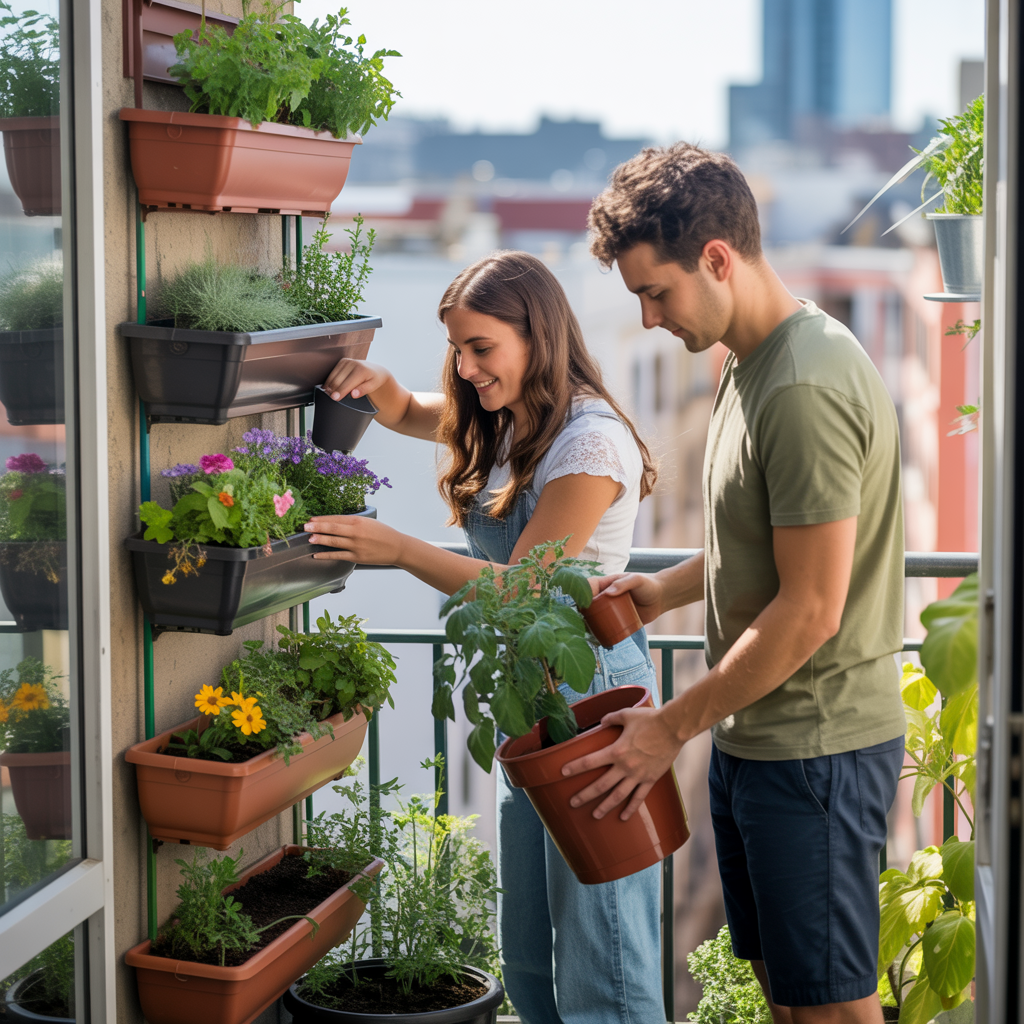
For those of us living in the vibrant urban landscape of São Paulo, the yearning for a touch of green, the taste of homegrown produce, and the satisfaction of nurturing life can feel like a distant dream. But the concrete jungle doesn’t have to be a barrier to your gardening aspirations.
In fact, the constraints of small space gardening can spark incredible creativity and innovation, especially when guided by the principles of science. This comprehensive guide is your urban gardener’s scientific toolkit, designed to empower you to grow more food in less space, right here in the heart of the city.
We will delve into the fundamental scientific principles that govern plant growth—from the intricacies of soil science tailored for containers to the optimization of light in shaded urban environments and the strategic use of vertical space.
This isn’t just about planting seeds and hoping for the best; it’s about understanding the “why” behind each technique to maximize your yield, embrace sustainable practices relevant to our city, and transform your balcony, patio, or even a sunny windowsill into a thriving urban oasis. Prepare to see your small space not as a limitation, but as a unique ecosystem waiting to be cultivated.
The Foundation: Soil Science for the Urban Gardener
The ground beneath our feet might be mostly concrete in São Paulo, but the principles of soil science remain paramount for container gardening. Your potting mix is the lifeline of your urban garden.
Understanding the Urban Soil Challenge: Containers vs. Garden Beds
Unlike in-ground gardens, containers have a limited volume, which affects water retention, nutrient availability, and drainage. The typical clay-rich soil of the São Paulo region, while fertile in its natural context, becomes compacted and poorly draining in pots.
Crafting the Ideal Urban Growing Medium: The Science of Potting Mix
The key is to create a lightweight, well-draining, and nutrient-retentive mix. A good starting point is a blend of:
- Peat Moss or Coco Coir: Provides excellent water retention and aeration. Coco coir is a more sustainable alternative to peat moss.
- Perlite or Vermiculite: Improves drainage and aeration. Perlite is lightweight and white, while vermiculite retains more water and nutrients.
- Compost: Adds essential nutrients and beneficial microbes. Look for locally sourced compost in São Paulo markets for a boost of regional biodiversity.
The ideal ratio will vary depending on the plants you intend to grow. For example, vegetables generally prefer a richer mix with more compost.
Nutrient Management in Urban Pots: Feeding Your Hungry Plants
Nutrients in containers are depleted more quickly than in the ground due to frequent watering. Regular feeding is crucial.
- Slow-Release Fertilizers: Incorporate these into your potting mix at planting for a steady supply of nutrients.
- Liquid Fertilizers: Supplement with liquid fertilizers every few weeks during the growing season. Choose a balanced formula or one specific to fruiting and flowering plants. Organic options are readily available in São Paulo and are a sustainable choice.
Remember: Over-fertilizing can be as harmful as under-fertilizing, leading to nutrient burn and stressed plants. Observe your plants for signs of deficiency or excess.
Harnessing the Sun: Light Optimization in Urban Canyons
Tall buildings and the dense urban fabric of São Paulo can create challenging light conditions. Understanding the science of light and how it interacts with your space is essential.
The Science of Photosynthesis: The Engine of Plant Growth
Plants use sunlight to convert carbon dioxide and water into sugars for energy. The intensity and duration of light directly impact this process. Most fruiting vegetables need at least 6-8 hours of direct sunlight per day.
Mapping Your Urban Sunscape: Understanding Light Patterns
Observe how sunlight falls on your balcony or terrace throughout the day. Note the areas that receive direct sun, partial shade, and full shade. This “light map” will dictate which plants will thrive in different zones.
Techniques for Maximizing Urban Light:
- Vertical Gardening Systems: Trellises, stacking planters, and wall-mounted containers can position plants to receive more light, utilizing vertical space that might otherwise be shaded. Consider the direction your balcony faces (north-facing in the Southern Hemisphere generally receives the most consistent sunlight).
- Reflective Surfaces: Painting walls white or using reflective materials can bounce light onto plants in shadier spots.
- Strategic Plant Placement: Taller plants can provide shade for more sensitive varieties.
The Vertical Advantage: Growing Up, Not Out
In São Paulo’s compact urban environments, horizontal space is a premium. Vertical gardening is a scientific solution to this constraint.
The Physics of Vertical Growth: Supporting Your Plants
Understanding how plants naturally climb and how to provide adequate support is key to successful vertical gardening.
- Trellises and Stakes: Ideal for vining plants like tomatoes, cucumbers, and beans. Choose sturdy materials that can withstand wind, a common factor in higher floors.
- Stacking Planters: Allow you to grow multiple plants in a small footprint, maximizing the use of vertical space.
- Wall-Mounted Containers: Great for herbs, strawberries, and leafy greens. Ensure your wall structure can support the weight, especially when the containers are watered.
Popular Vertical Gardening Systems for Urban Spaces in São Paulo:
- Pallet Gardens: Repurposed wooden pallets can be transformed into charming vertical planters.
- Hanging Baskets: Perfect for cascading flowers and small fruiting plants like strawberries. Ensure they are securely hung.
- DIY PVC Pipe or Gutter Gardens: Lightweight and customizable systems ideal for leafy greens and herbs.
Working Together: The Science of Companion Planting in Small Spaces
Companion planting is a time-tested technique where different plant species are grown in close proximity to benefit each other. This is particularly valuable in the limited space of an urban garden.
The Chemical Language of Plants: Allelopathy and Beneficial Interactions
Some plants release chemicals that can either inhibit or promote the growth of nearby plants. Understanding these allelopathic relationships is crucial for effective companion planting.
Synergistic Partnerships for São Paulo Urban Gardens:
- Basil and Tomatoes: Basil is believed to improve tomato flavor and deter pests.
- Marigolds and Vegetables: Marigolds repel nematodes and other harmful soil pests.
- Rosemary and Cabbage Family: Rosemary can deter cabbage moths.
- Mint and Cabbage Family: Mint can also deter cabbage moths and other pests. Be mindful that mint can be invasive in the ground but is easily contained in pots.
By strategically pairing plants, you can create a more resilient and productive small-space garden, reducing the need for chemical pesticides, which is in line with sustainable urban living.
Water Wisdom: Efficient Irrigation for Urban Containers
Watering is a critical aspect of container gardening, especially in São Paulo’s sometimes unpredictable climate.
The Science of Hydration: Understanding Water Movement in Pots
Containers dry out much faster than in-ground gardens. Overwatering and underwatering are common pitfalls. The rate of evaporation is higher on sunny balconies and rooftops.
Smart Watering Techniques for Urban Gardens:
- Watering deeply and less frequently: This encourages deep root growth, making plants more resilient to drought. Water until you see drainage from the bottom of the pot.
- Mulching: Applying a layer of organic mulch (like shredded leaves or wood chips, readily available in some São Paulo garden centers) to the surface of your containers helps to retain moisture and regulate soil temperature.
- Self-Watering Containers: Consider using self-watering pots or DIY versions, especially if you have limited time for daily watering.
- Rainwater Harvesting: If space allows, collect rainwater to water your plants. This is a sustainable practice that also benefits your plants as rainwater is naturally soft and free of chlorine.
Frequently Asked Questions (FAQ)
- My balcony is mostly shaded. Can I still grow vegetables?
- While most fruiting vegetables need ample sunlight, many leafy greens (lettuce, spinach, kale), herbs (mint, parsley, cilantro), and some root vegetables (radishes) can tolerate partial shade (4-6 hours of sunlight). Choose varieties specifically recommended for shade or partial shade.
- What are the best vegetables to grow in containers in São Paulo’s climate?
- Many vegetables thrive in containers here. Consider tomatoes (choose determinate or bush varieties for smaller spaces), peppers, eggplant, zucchini, beans (pole varieties are great for vertical gardening), and various herbs. Adapt your planting times to the local seasons.
- How can I deal with pests and diseases in my small urban garden without using harsh chemicals?
- Focus on prevention through healthy soil, proper watering, and good air circulation. Encourage beneficial insects (like ladybugs). For mild infestations, try insecticidal soap or neem oil, available in most garden supply stores in São Paulo. Hand-picking pests can also be effective in small spaces.
- Is hydroponics a good option for small urban spaces?
- Yes, hydroponics (growing plants without soil in nutrient-rich water solutions) can be a highly efficient way to grow in very limited spaces, as it often allows for faster growth and higher yields. There are various beginner-friendly hydroponic systems available, and it can be a fascinating “Home Lab” project in itself.
- How can I make my urban garden more sustainable in São Paulo?
- Compost your kitchen scraps and yard waste (if any) to create your own nutrient-rich soil amendments. Save and reuse rainwater. Choose locally sourced, organic seeds and supplies. Practice companion planting to reduce the need for pesticides. Consider growing perennial herbs and vegetables for long-term yields.
Cultivating Your Urban Sanctuary: A Greener São Paulo Starts Here
Your journey into the science of small space gardening has equipped you with more than just planting tips; it has provided you with a framework for understanding the fundamental principles that govern life in your urban garden. By embracing the science of soil, light, verticality, companionship, and water, you are empowered to transform even the most modest balcony in São Paulo into a vibrant, productive, and sustainable sanctuary. This is the essence of the Sustainable Living: Urban Edition ethos—leveraging knowledge and ingenuity to bring the beauty and bounty of nature into our city lives, one container at a time. Happy gardening!

C. Holmes is the keen analytical mind behind Infinitas Minds, a blog dedicated to revolutionizing the way we approach home economics. With a meticulous eye for detail and a passion for logical solutions, C. Holmes tackles everyday challenges to reveal hidden opportunities for efficiency and savings. His mission is to simplify life, spark innovation, and offer practical, insightful approaches for navigating our often-complex world with greater ease and financial clarity.
Driven by a belief that true mastery of home economics lies in understanding the ‘why’ and ‘how’ behind every decision, C. Holmes curates comprehensive guides, actionable experiments, and groundbreaking perspectives. Expect a blend of sharp analysis, creative problem-solving, and a touch of ingenuity in every piece, empowering readers to transform their homes into havens of efficiency and peace.