
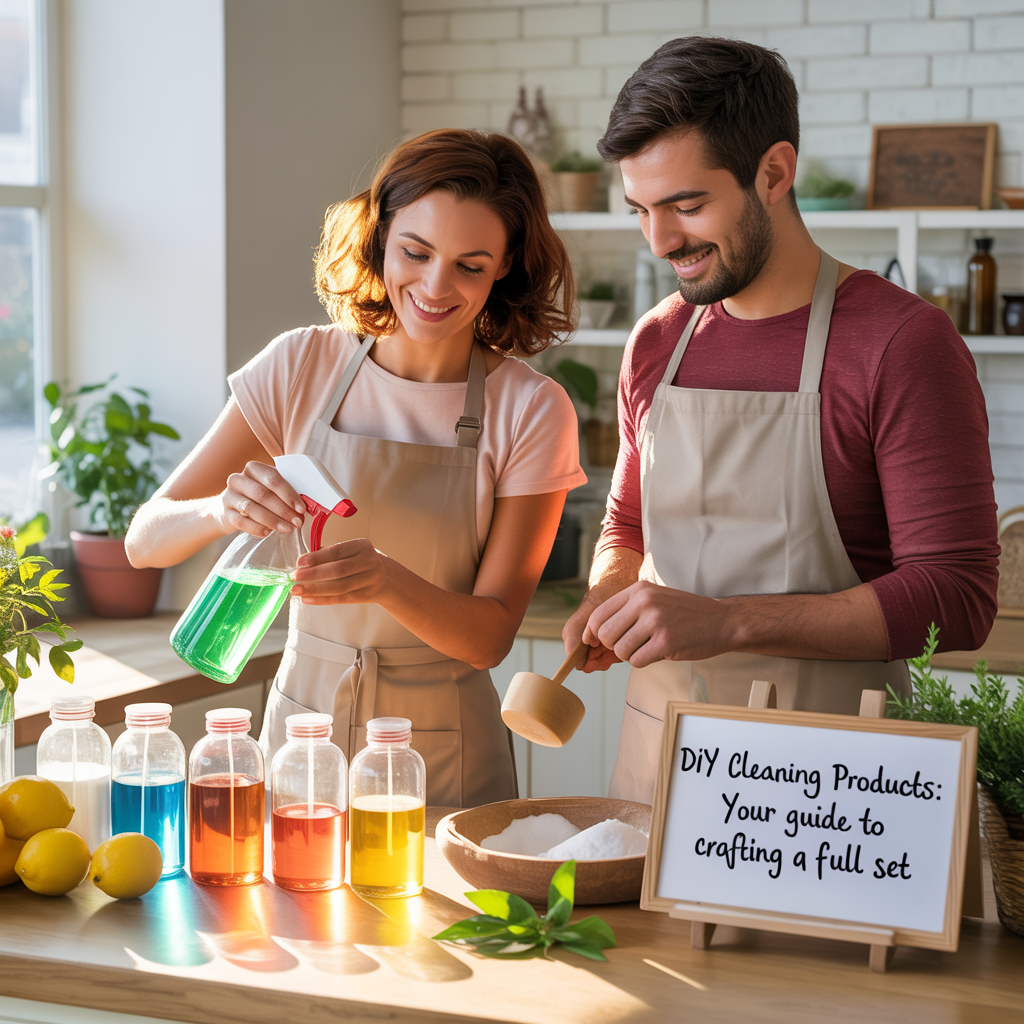
There is a quiet revolution happening in our homes. It’s a shift away from dependence on mass-produced goods and a return to the satisfaction and wisdom of creating things with our own hands. We see it in baking our own bread, tending to a small balcony garden, and now, in crafting the very products we use to care for our living spaces.
The path to a more self-sufficient urban life doesn’t require a large plot of land; it can begin right under your kitchen sink. This is your guide to taking back control of your cleaning cabinet by creating your own effective, eco-friendly cleaning recipes.
For too long, we’ve been led to believe that we need a different specialized, expensive, and chemical-laden bottle for every conceivable cleaning task. The truth is, a handful of simple, powerful, and budget-friendly ingredients can do the job just as well, if not better, without the harsh fragrances and environmental impact.
This guide is your complete compêndio to crafting a full suite of DIY cleaning products. We will go room by room, creating practical solutions that will leave your home sparkling and your conscience clear.
This is more than just about saving money; it’s about intention, craft, and building a truly self-reliant home, even here in the heart of a city like São Paulo.
The Self-Sufficient Pantry: Your Core Cleaning Ingredients
The foundation of your entire DIY cleaning arsenal rests on a few key ingredients. These are the versatile workhorses of the natural cleaning world.
- Distilled White Vinegar: A brilliant natural degreaser, deodorizer, and mineral deposit remover due to its acidic nature. For a deep dive, see my Dossier on Vinegar’s Uses.
- Baking Soda (Sodium Bicarbonate): A gentle abrasive, powerful deodorizer, and mild alkali perfect for scrubbing and breaking down acidic grime. Explore its full potential in my Scientist’s Guide to Cleaning with Baking Soda.
- Castile Soap (Liquid): A gentle, vegetable-oil-based soap that is an incredible all-around cleaner. It’s biodegradable and highly concentrated.
- Isopropyl Alcohol (Rubbing Alcohol, 70%): An effective disinfectant and solvent that evaporates quickly, making it ideal for streak-free cleaning.
- Essential Oils: For adding natural, pleasant scents and, in some cases (like tea tree or thyme), boosting antimicrobial properties.
With these five ingredients, you can replace dozens of commercial products. For a full breakdown on how to combine them safely and effectively, you can reference my Home Formulator’s Guide to All-Purpose Cleaners.
The Kitchen Arsenal: Food-Safe & Powerful Cleaners
The kitchen demands cleaners that are tough on grease but safe to use around food preparation areas.
Recipe #1: The “Everyday Sunshine” All-Purpose Kitchen Spray
- Best For: Countertops (laminate, tile, granite – see note), stovetops, sinks, and wiping down appliances.
- Why It Works: Combines the degreasing power of soap with the fresh scent and grease-cutting ability of citrus.
- You’ll Need: A 500ml spray bottle, 2 cups of warm distilled water, 1 teaspoon of liquid castile soap, 15-20 drops of lemon or orange essential oil.
- Method:
- Pour the warm water into the spray bottle first.
- Add the castile soap and essential oils.
- Gently swirl to combine (don’t shake).
- Granite/Marble Note: For natural stone countertops, omit the castile soap and use 1/4 cup of isopropyl alcohol instead. The soap can be too harsh for the sealant over time.
Recipe #2: The “Soft Scrub” Abrasive Cleaner
- Best For: Scrubbing stainless steel sinks, pots and pans with baked-on food, and tough stovetop grime.
- Why It Works: The baking soda provides mechanical abrasion while the soap helps to lift and wash away the loosened grime.
- You’ll Need: A bowl, 1 cup of baking soda, 2-3 tablespoons of liquid castile soap, (optional) 1 tablespoon of water.
- Method:
- In the bowl, start with the baking soda.
- Slowly add the castile soap, mixing until you form a thick, frosting-like paste.
- Add a bit of water if needed to reach the desired consistency.
- Apply with a sponge or cloth, scrub, and rinse thoroughly.
The Bathroom Brigade: Tackling Soap Scum and Grime
The bathroom requires solutions that can handle soap scum, hard water deposits, and potential mildew.
Recipe #3: The “Daily Shower Shield” Spray
- Best For: Preventing soap scum and mildew buildup on shower walls and doors.
- Why It Works: The vinegar dissolves mineral deposits from hard water before they can build up, while the tea tree oil provides natural antifungal properties.
- You’ll Need: A 500ml spray bottle, 1.5 cups of distilled water, 1/2 cup of white vinegar, 10 drops of tea tree essential oil.
- Method:
- Combine all ingredients in the spray bottle and swirl.
- After each shower, lightly mist the walls, door, and curtain. No need to rinse or wipe.
Recipe #4: The Fizzing Toilet Bowl Cleaner
- Best For: A quick, effective, and deodorizing clean for the toilet bowl.
- Why It Works: The classic acid-base reaction provides a fizzing, scrubbing action that helps to dislodge grime and deodorize the bowl.
- Method:*
- Pour about 1/2 cup of baking soda directly into the toilet bowl, making sure to coat the sides.
- Let it sit for 15 minutes.
- Pour 1 cup of white vinegar into the bowl. It will fizz vigorously.
- Let the fizzing subside, then use a toilet brush to scrub the bowl. Flush.
Living Spaces & Surfaces: Gentle and Effective Solutions
These recipes are designed for glass, wood, and floors, requiring a gentle yet effective touch.
Recipe #5: The Streak-Free Glass & Mirror Cleaner
- Best For: Windows, mirrors, and glass surfaces.
- Why It Works: Alcohol and vinegar are volatile solvents that evaporate quickly and completely, leaving no residue behind to cause streaks.
- You’ll Need: A 500ml spray bottle, 1 cup of distilled water, 1/2 cup of white vinegar, 1/2 cup of 70% isopropyl alcohol.
- Method:
- Combine all ingredients in the spray bottle and swirl.
- Spray onto the glass surface and wipe clean with a clean microfiber cloth for best results.
Recipe #6: The Nourishing Wood Furniture Polish
- Best For: Adding shine and a light cleaning to sealed wood furniture.
- Why It Works: The olive oil conditions and nourishes the wood, while the acidity of the lemon juice helps to gently lift dirt and grime.
- You’ll Need: A small jar, 1/2 cup of olive oil, 1/4 cup of lemon juice (fresh is best).
- Method:
- Combine the oil and lemon juice in the jar and shake well before each use.
- Apply a small amount to a soft, clean cloth and rub it into the wood in the direction of the grain.
- Buff with another clean, dry cloth to a beautiful shine.
- Important Note: Only use this on sealed wood. Always test on a small, inconspicuous area first.
Recipe #7: The All-Natural Floor Mopping Solution
- Best For: Tile, vinyl, and linoleum floors.
- Why It Works: The hot water loosens dirt, the vinegar cuts through grime and dissolves mineral deposits, and the tiny amount of soap helps to lift and suspend the dirt to be wiped away.
- You’ll Need: A bucket, 1 gallon (approx. 4 liters) of hot water, 1 cup of white vinegar, 1/4 teaspoon (a very small amount!) of liquid castile soap.
- Method:
- Fill the bucket with hot water.
- Add the vinegar and the soap. Stir gently.
- Mop the floor and let it air dry. The small amount of soap ensures no rinsing is required.
- Important Note: Do not use this acidic solution on natural stone (marble) or unsealed wood floors.
Essential Practices for the DIY Cleaner Crafter
- Labeling is Law: With multiple homemade solutions, clear and waterproof labels are not optional; they are a critical safety measure.
- Choose Your Bottles Wisely: Glass spray bottles are ideal as they are non-reactive. If using plastic, choose high-quality PET (Type 1) plastic, as some essential oils can degrade cheaper plastics over time.
- Make Small, Fresh Batches: Without commercial preservatives, these cleaners are best made in small quantities that you’ll use within a month or two to ensure freshness and potency.
Frequently Asked Questions (FAQ)
- I made a cleaner with castile soap and water, and the ingredients separated. Is it ruined?
- No, not at all! This is completely normal. Since there are no chemical emulsifiers, natural separation can occur. Simply give the bottle a gentle swirl before each use to recombine the ingredients.
- How do I know which essential oils are safe for my pets?
- This is a crucial question. Many essential oils, including tea tree, citrus oils (in high concentration), eucalyptus, and peppermint, can be toxic to pets, especially cats. When in doubt, leave the essential oils out entirely or consult your veterinarian. The cleaning power of the recipes comes from the base ingredients, not the scent.
- Why can’t I just mix all these great ingredients together for a “super cleaner”?
- Because chemistry doesn’t work that way. As detailed in my formulator’s guide, mixing an acid (vinegar) with a base (castile soap or baking soda) neutralizes both, leaving you with a less effective product. The key is to use the right ingredient or combination for the right job.
- These cleaners seem simpler than commercial ones. Are they really as effective?
- Yes, for 95% of household cleaning tasks, they are just as, if not more, effective. Commercial cleaners often add chemicals for sudsing, thickening, and long-term preservation that don’t actually contribute to cleaning power. These simple recipes harness the direct chemical properties of their ingredients to get the job done efficiently.
- Where is the best place to buy these bulk ingredients in São Paulo?
- For bulk vinegar and baking soda, large “atacadista” stores can be very economical. For high-quality liquid castile soap, essential oils, and other specific ingredients, look for “lojas de produtos naturais” or “zonas cerealistas” (like the one near Mercadão Municipal), which often sell these items in larger quantities or a granel (by weight).
The Craft of a Clean Home
You have just unlocked a foundational skill in the art of creative urban self-sufficiency. By learning to craft your own cleaning products, you are doing so much more than just cleaning your home. You are making a conscious choice to reduce your environmental footprint, to take control of the ingredients you bring into your life, and to embrace the profound satisfaction that comes from creating something useful with your own hands. This is the craft of a clean home—a home cared for with intention, wisdom, and a touch of homemade pride.

C. Holmes is the keen analytical mind behind Infinitas Minds, a blog dedicated to revolutionizing the way we approach home economics. With a meticulous eye for detail and a passion for logical solutions, C. Holmes tackles everyday challenges to reveal hidden opportunities for efficiency and savings. His mission is to simplify life, spark innovation, and offer practical, insightful approaches for navigating our often-complex world with greater ease and financial clarity.
Driven by a belief that true mastery of home economics lies in understanding the ‘why’ and ‘how’ behind every decision, C. Holmes curates comprehensive guides, actionable experiments, and groundbreaking perspectives. Expect a blend of sharp analysis, creative problem-solving, and a touch of ingenuity in every piece, empowering readers to transform their homes into havens of efficiency and peace.