
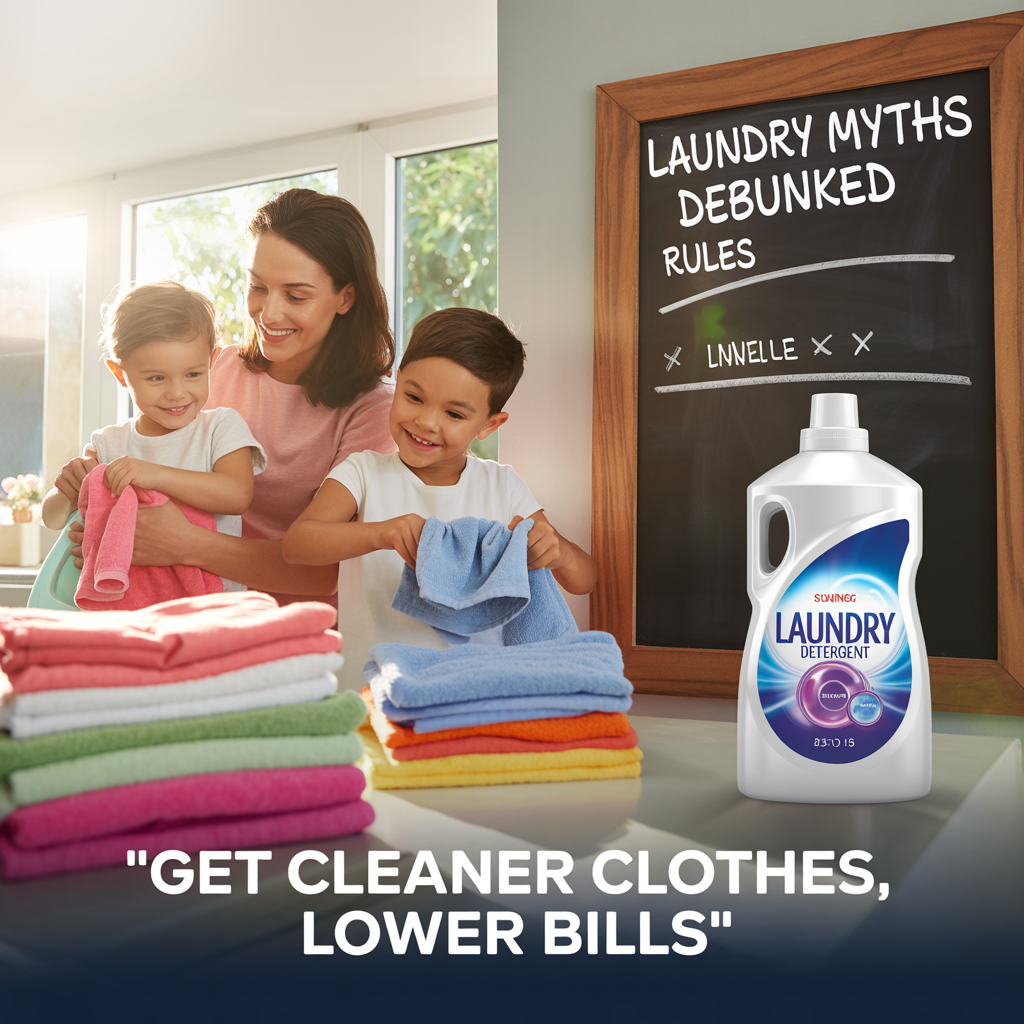
Laundry is one of the most universal and repetitive household chores, governed by a set of “rules” often passed down like family heirlooms. We follow them without question: use more soap for dirtier clothes, hot water sanitizes best, fabric softener is a must. But what if I told you that many of these unquestioned truths are not only outdated but are actively costing you money, damaging your clothes, and harming your washing machine?
It’s time to take our laundry routine out of the realm of folklore and bring it into the Home Lab for a rigorous scientific investigation.
This is not just another list of laundry tips. This is a systematic debunking of the most common and costly laundry myths. We will examine the chemistry of detergents, the physics of agitation, and the thermodynamics of water temperature to understand what truly makes clothes clean.
My goal is to liberate you from inefficient habits and arm you with an evidence-based framework that leads to cleaner clothes, a longer lifespan for your garments and appliances, and significant savings on your utility bills.
Prepare to challenge everything you thought you knew about this fundamental chore. It’s time to separate fact from fiction.
The Core Principles of Clean: What Actually Happens in Your Washer
Before we bust any myths, we must understand the science of cleaning. Success in the wash depends on a perfect balance of four factors, sometimes called the “Sinner’s Circle”:
- Chemical Action (The Cleaner): This is the work of your detergent. Its primary components, surfactants, lift dirt from fabrics, while enzymes specifically target and break down protein and grease stains.
- Mechanical Action (The Muscle): This is the tumbling, agitation, and friction created by the washing machine. It physically knocks dirt and grime loose from the fibers.
- Thermal Action (The Heat): This is the water temperature. Heat can help certain chemical reactions happen faster and can aid in dissolving some types of grime, particularly oil.
- Time (The Duration): This refers to the length of the wash and soak cycles, giving the other three factors enough time to do their job effectively.
Almost every laundry myth stems from misunderstanding or over-relying on one of these factors at the expense of the others. Our goal is to bring them back into balance.
Myth-Busting Zone 1: The Fallacy of “More is More”
This category tackles the most common resource-wasting beliefs related to detergents and additives.
Myth #1: “More Detergent Means Cleaner Clothes.”
- The Fiction: A heavily soiled load requires a heaping scoop of detergent to get clean.
- The Scientific Fact: This is unequivocally false and the most expensive myth on this list. Modern detergents, especially High-Efficiency (HE) formulas, are highly concentrated. Using too much creates an excess of suds that actually cushions the clothes, reducing the effectiveness of the mechanical action (the clothes slide around instead of scrubbing against each other). Furthermore, the machine cannot fully rinse away the excess soap. This leaves behind a sticky residue that attracts and traps more dirt, leads to skin irritation, and creates a buildup of smelly biofilm inside your washer.
- The New Protocol: Read the label. Use the recommended amount for your load size, or even slightly less. For HE machines, the “Max” line is a limit, not a suggestion. The absence of excessive suds is a sign your machine is working correctly.
Myth #2: “Fabric Softener is Necessary for Soft, Fresh Clothes.”
- The Fiction: You need fabric softener in every load to get that soft, fresh-from-the-laundry feel.
- The Scientific Fact: Liquid fabric softener functions by coating fabric fibers with a thin, waxy, lubricating layer. While this makes them feel slicker and reduces static, it comes at a steep price. This coating builds up over time, drastically reducing the absorbency of towels (making them repel water) and clogging the pores of high-performance athletic wear (trapping odors and bacteria). This waxy residue also builds up inside your machine, becoming a food source for mold and mildew.
- The New Protocol: For natural softening and rinsing, add 1/2 cup of distilled white vinegar to the fabric softener dispenser. As a mild acid, vinegar works by dissolving any residual alkaline detergent and mineral deposits, leaving fibers naturally softer without any coating. And no, your clothes will not smell like a salad; the scent rinses out completely. This is one of the best laundry tips and tricks you can adopt.
Myth-Busting Zone 2: The Temperature & Sorting Deception
Misconceptions about heat and how we sort our clothes are major sources of fabric damage and energy waste.
Myth #3: “You Must Use Hot Water for a Truly Deep Clean.”
- The Fiction: Only hot water can kill germs and power through heavy grime.
- The Scientific Fact: This is a holdover from the days of less effective, soap-based detergents. Today’s advanced detergents are formulated with enzymes (like protease for protein stains and lipase for greasy stains) that are designed to work optimally in cold or warm water. In fact, using hot water for laundry can be counterproductive: it can “cook” protein stains like blood, sweat, or grass, setting them permanently. It also accelerates color fading, can shrink garments, and damages elastic fibers. Most importantly, up to 90% of the energy consumed by a washing machine is used just to heat the water.
- The New Protocol: Switch to cold water for 80-90% of your laundry. It’s effective, gentler on your clothes, and dramatically lowers your energy bill. Reserve warm water for heavily soiled items like work clothes and hot water only for specific, targeted tasks like sanitizing bedding after an illness or washing extremely greasy rags.
Myth #4: “Sorting by Color is the Only Rule That Matters.”
- The Fiction: As long as you separate lights, darks, and whites, you’re good to go.
- The Scientific Fact: While color separation is important to prevent dye transfer, how to do laundry correctly also involves sorting by fabric weight and texture. Washing heavy, abrasive items like denim jeans and bath towels alongside lightweight blouses or t-shirts creates excessive friction that pummels the more delicate fabrics, leading to pilling, stretching, and premature wear. Likewise, washing lint-producing items (towels, flannel) with lint-attracting items (corduroy, fleece, synthetics) results in frustrating, lint-covered clothes.
- The New Protocol: Adopt a multi-dimensional sorting system. First, sort by color. Then, within those color piles, create sub-piles based on fabric weight. A load of dark, heavy towels and jeans should be separate from a load of dark, lightweight t-shirts and synthetics.
Myth-Busting Zone 3: Misunderstanding Your Machines
Your washer and dryer are powerful tools, but they are often misunderstood and neglected.
Myth #5: “Dryer Sheets Are a Harmless Way to Fight Static.”
- The Fiction: A dryer sheet is a small, necessary addition to every dryer load.
- The Scientific Fact: Dryer sheets work on the same principle as liquid fabric softener: they coat your clothes with a thin layer of waxy residue. This not only reduces the absorbency of towels but also clogs the tiny holes of your dryer’s lint screen. Over time, this buildup restricts airflow, forcing your dryer to work harder and longer, wasting energy and creating a significant fire hazard.
- The New Protocol: Switch to reusable wool dryer balls. They soften clothes through gentle mechanical action as they tumble, create separation between items to improve airflow (thus shortening drying time), and can be used for hundreds of loads.
Myth #6: “Washing Machines Are Self-Cleaning.”
- The Fiction: Since it’s constantly filled with soap and water, the machine cleans itself with every cycle.
- The Scientific Fact: This is a dangerous myth. The warm, damp environment of a washing machine is a perfect breeding ground for mold, mildew, and bacteria. Residue from detergent and fabric softener combines with mineral deposits from hard water to create a slimy biofilm that can cause persistent odors and even deposit a layer of grime back onto your “clean” clothes.
- The New Protocol: Clean your washing machine once a month. For a top-loader, run an empty cycle on the hottest setting with 2 cups of vinegar. Follow with another hot cycle with 1 cup of baking soda. For a front-loader, add vinegar to the detergent dispenser and baking soda to the drum and run a “tub clean” cycle or the hottest equivalent. Don’t forget to wipe down the rubber gasket.
The “Lightning Round”: Busting 5 More Quick Myths
- Myth #7: “You need to wash jeans after every wear.”
- Fact: You don’t. Over-washing degrades denim fibers. Spot clean minor spills and wash them only when they are visibly dirty or smell.
- Myth #8: “Filling the machine to the top saves energy and water.”
- Fact: Overloading is one of the worst laundry mistakes to avoid. It prevents clothes from agitating properly (so they don’t get clean) and puts immense strain on the washer’s motor and suspension.
- Myth #9: “Hairspray is a great ink stain remover.”
- Fact: It used to be, because old hairspray formulas were high in alcohol. Today, the best way to treat an ink stain is with actual rubbing alcohol. Check my Science of Stain Removal guide for more.
- Myth #10: “A little bleach in every white load keeps them bright.”
- Fact: Chlorine bleach is a harsh chemical that weakens cotton fibers over time and can cause yellowing if overused. An oxygen-based bleach (like OxiClean or sodium percarbonate) is a much safer and more effective alternative for whitening.
- Myth #11: “You have to pre-soak clothes for hours.”
- Fact: Even a 30-minute pre-soak in cold water with a bit of detergent can dramatically improve stain removal for heavily soiled items, as it gives the enzymes time to begin their work before the main wash cycle even starts.
Frequently Asked Questions (FAQ)
- Is it really okay to wash almost everything in cold water? Will my clothes get clean and smell fresh?
- Yes, absolutely. Modern detergents are designed for it. The enzymes within them are most active in temperatures between 60-100°F (15-40°C). Cold water is perfectly capable of removing most everyday dirt and odors. For heavily soiled or greasy items, warm water can provide an extra boost.
- My “clean” towels sometimes have a musty, mildewy smell. What causes this?
- This is a classic sign of fabric softener buildup. The waxy residue traps moisture and bacteria, preventing the towel from ever drying completely and creating a perfect environment for mildew. Strip your towels by washing them in a hot cycle with vinegar (no detergent), followed by another hot cycle with baking soda (no detergent).
- How can I naturally whiten my clothes without using any bleach?
- For natural whitening, add 1/2 cup of baking soda or washing soda to your wash cycle along with your detergent. Soaking whites in a solution of water and oxygen bleach before washing is also highly effective. For a traditional method, hanging whites to dry in direct sunlight can provide a natural, gentle bleaching effect.
- What’s the real difference between “bio” and “non-bio” detergent?
- “Bio” (biological) detergents contain enzymes, which are excellent for breaking down protein- and fat-based stains like food, sweat, and grass. “Non-bio” detergents do not contain these enzymes, making them a better choice for people with very sensitive skin, as enzymes can occasionally cause irritation.
- Do those plastic “laundry balls” or “eco-eggs” that claim you don’t need detergent actually work?
- The scientific consensus is that they are largely ineffective. Most independent tests show that their cleaning power is only marginally better than washing with plain water. The cleaning effect comes almost entirely from the mechanical action of the machine, not from any special properties of the ceramic pellets inside the balls.
The Liberated Launderer: A New Manifesto
You have now dismantled more than a century of laundry folklore. By embracing these evidence-based principles, you are no longer just “doing the laundry”; you are executing a precise and efficient scientific process. This is the core of the Home Lab philosophy: questioning outdated assumptions and replacing them with systems that work better, cost less, and are gentler on our belongings and our planet. You are now free from the tyranny of the hot water dial and the myth of “more is more.” You are a liberated launderer, armed with the knowledge to achieve superior results with less effort and fewer resources. That is the very definition of working smarter, not harder.

C. Holmes is the keen analytical mind behind Infinitas Minds, a blog dedicated to revolutionizing the way we approach home economics. With a meticulous eye for detail and a passion for logical solutions, C. Holmes tackles everyday challenges to reveal hidden opportunities for efficiency and savings. His mission is to simplify life, spark innovation, and offer practical, insightful approaches for navigating our often-complex world with greater ease and financial clarity.
Driven by a belief that true mastery of home economics lies in understanding the ‘why’ and ‘how’ behind every decision, C. Holmes curates comprehensive guides, actionable experiments, and groundbreaking perspectives. Expect a blend of sharp analysis, creative problem-solving, and a touch of ingenuity in every piece, empowering readers to transform their homes into havens of efficiency and peace.